
Author

Lotus Silvan

Browsing

Lakes are intricate ecosystems dependent on equilibrium to flourish, not only beautiful locations. Whether it’s a huge public lake or a backyard pond, keeping water health is crucial for biodiversity as well as beauty. One solution growing increasingly in popularity? Setting up a fountain. These aquatic elements serve a critical function in supporting lake ecosystems’ health and stability in addition to their aesthetic appeal.

How Fountains Improve Water Quality?

Including a lake fountain is not just about producing the ideal Instagram ripple effect. Strong instruments for raising water quality are fountains. By means of aeration, they raise oxygen levels, which supports good bacteria in degrading surplus nutrients including phosphorus and nitrogen. If ignored these extra nutrients can lead to harmful algae blooms and murky.

Many property managers and lake owners turn to professionals like That Pond Guy to assist in installing the ideal fountain system for their particular needs. Well-designed lake springs can help manage bad smells from anaerobic situations (low oxygen environments) near the lake’s bottom, lower stagnation, and keep water flowing.

Algae Control Without Harsh Chemicals

Algae overgrowth is one of the most often occurring issues in lakes. Although chemical treatments might have short-term effects, over time they usually result more damage than benefit. By encouraging circulation and oxygenation, fountains assist break the conditions—namely, stagnant water and nutrient accumulation—that algae feed on. Fountains thus provide a more environmentally friendly and sustainable answer for long-term algae management.

Fountains also lower the food supply for algae by promoting the development of good bacteria that digest extra nutrients. It’s a win-win: fewer green scum, clearer water, and no strong chemicals necessary.

Aquatic Life Support

Good oxygen levels and water movement are essential for healthy fish and plant life. Thermal layering—the phenomenon whereby surface water becomes too hot and bottom water too cold—results from stagnant water, usually causing oxygen depletion. This can kill off plant life and suffocate fish.

Fountains maintain more uniform oxygen levels across the lake by mixing the water and breaking up these thermal layers. Along with a range of aquatic plants that enhance the diversity of the ecosystem, this balanced environment is ideal for supporting fish such bass, bluegill, and koi.

Aesthetic and Recreational Advantages

We should not discount the aesthetic and auditory attraction. With the calming sound of flowing water, a well-placed fountain can turn a boring pond into a beautiful center point. Whether it’s a little decorative spray or a spectacular multi-tiered display, fountains enhance the beauty and serenity of the environment.

Better water also translates into safer and more pleasant leisure. From fishing to paddleboarding, a clean, well-oxygenated lake enhances the general outdoor experience.

Conclusion

Installing a lake fountain enlivens the whole ecosystem—far more than it beautifies the surface. Fountains provide an all-in-one answer for maintaining a good lake from stopping algae blooms to promoting fish populations and enhancing water quality. Keeping your lake looking its best and preserving its health depends on finding the correct setup. Professional pond contractors make this quite simple.

Whether you own private lakeside property or run a public park, a fountain could be exactly the upgrade your water requires to remain balanced, clean, and full of life.


Cryptocurrency ventures founded on traditional business principles consistently outperform technology-first competitors despite the industry’s technical foundations. Analysis of successful digital asset companies reveals a striking pattern where management experience, operational discipline, and strategic planning create substantially better outcomes than superior technological innovation alone. This counter-intuitive success pattern challenges the prevailing narrative that crypto ventures require primarily technical expertise rather than conventional business fundamentals. If you’re watching how exchanges and service models evolve, have a peek at this web-site for patterns tied to success. Companies prioritising solid business models before blockchain novelty show 3.7× better five-year survival rates and 2.5× higher profitability than those emphasising technological innovation without a comparable business foundation.

Market drives product development

The most successful cryptocurrency ventures implement customer-centred development rather than technology-first approaches common among failed projects. This market-oriented focus begins with identifying specific customer problems requiring solutions rather than creating blockchain implementations seeking subsequent applications. This customer-first methodology typically involves extensive market research before technical development, systematic problem validation through potential customer engagement, and solution iteration based on direct feedback rather than technical elegance. The approach ensures addressing genuine market needs rather than creating sophisticated blockchain implementations without clear utility value, driving actual adoption.

Companies implementing these market-focused practices demonstrate dramatically higher customer acquisition rates while achieving substantially lower marketing costs than technology-centred competitors. The customer-problem orientation creates natural distribution advantages by addressing recognized needs rather than requiring extensive knowledge about blockchain capabilities before establishing value propositions.

Discipline creates structure

Operational discipline regarding cash management provides cryptocurrency ventures with crucial survival advantages during market downturns. Business-oriented operations typically maintain 18-24 month runways regardless of market conditions, implement strict budget controls during both bull and bear markets, and establish diversified revenue streams, reducing dependence on token appreciation or venture funding.

This financial prudence creates particular advantages during extended market contractions when technology-focused operations often face existential threats due to inadequate cash reserves or unsustainable token-based compensation structures. The business-focused approach treats blockchain industry volatility as a given condition requiring appropriate operational preparation rather than temporary disruption awaiting inevitable recovery. Companies implementing these conservative financial practices survived recent market contractions at nearly 4× the rate of those operating with minimal reserves or token-dependent business models, regardless of technological sophistication or initial market position.

Partnerships outperform technical expertise

Ecosystem development through strategic partnerships creates sustainable advantages exceeding pure technological capabilities. Business-oriented cryptocurrency operations prioritise collaborative relationships, building distribution networks, integration partnerships, and complementary service arrangements, extending market reach beyond direct acquisition capabilities. This partnership emphasis often contradicts the decentralization idealism common among technology-focused cryptocurrency ventures, creating philosophical tensions but substantial practical advantages. Companies willing to compromise absolute decentralization ideals for practical business relationships demonstrate significantly faster market penetration regardless of relative technological quality.

The partnership advantage manifests particularly strongly when entering traditional industry verticals, where existing relationship networks dramatically outperform technological novelty in achieving adoption. Companies leveraging conventional partnership development methodologies consistently achieve faster institutional integration despite often implementing less technologically elegant solutions than purist competitors. Despite blockchain’s technical nature, the cryptocurrency industry matures from technology-focused business models to operational models. Digital asset ventures offer substantial opportunities to business-experienced professionals.

Let’s set the scene.

It’s 10:37 p.m. on a Friday night. You’re surrounded by instruction manuals that feel like they were written during a caffeine-fueled fever dream. You’ve cursed at a bag of screws twice. You’ve flipped a particle board panel upside down three times. And your TV is still on the floor.

Welcome to the shared trauma of mass-market entertainment centers.

Now… let’s talk about custom entertainment centers—aka, what you actually wanted when you walked into that furniture showroom and whispered, “just something clean and modern.”

Because when it comes to building a space that works for your home and doesn’t make you want to chuck a Phillips screwdriver across the room, custom is worth it.

Let’s compare, shall we?

📦 Off-the-Shelf Option: “Good Luck and Grab the Allen Wrench”

  • “Fits most TVs” (except yours)
  • Cable management = one sad hole in the back panel
  • Shelving? Sort of adjustable… if you’re okay with slanting
  • Color options: grayish, brownish, and almost white
  • Bonus: May collapse under the weight of your speaker system and shame

🎯 Verdict: Better than putting your TV on a stack of pizza boxes. Barely.

🎯 Custom Entertainment Center: “Hello, Gorgeous”

  • Built to your exact wall and TV size—no guesswork
  • Hidden cable tracks and outlets where you need them (no more wire spaghetti)
  • Integrated shelving that fits your decor and your gaming console
  • Storage drawers for remotes, board games, or those rogue candles you forgot you owned
  • Finish and style tailored to your home (no “assembly required” rage in sight)

🎯 Verdict: It doesn’t just fit your space—it makes your space.

The Hidden Bonus: Repairs You Won’t Need to Make

You know how cheap units warp, wobble, and whisper “please don’t lean on me” six months in? Not here.

Custom units are built with actual craftsmanship and quality materials, which means you’re not constantly googling “how to fix sagging cabinet doors” at midnight.

But hey—if you’re deep in the reno game, and you need some help beyond cabinetry, there’s no shame in brushing up on the best home repair tips too. (Spoiler: If duct tape is involved, you’re probably doing it wrong.)

You Deserve Better Than Wobbly MDF

This isn’t just about aesthetics—it’s about function, flow, and maintaining the last threads of your patience during renovation season.

Custom entertainment centers offer:

  • Real design that reflects your space
  • Real storage for your actual life
  • And real peace of mind that you won’t be re-buying it in 18 months

Plus, you can finally stop apologizing to guests for “the temporary setup” you’ve had since 2019.

Final Word from Genevieve Gorder

Let your living room breathe. Let it serve you. And above all—let your TV live in something better than a budget box with loose screws and a grudge.

When you go custom, you don’t just get a piece of furniture. You get a design feature, a clutter solution, and a sigh of relief.

And trust me: you’ve earned that sigh.

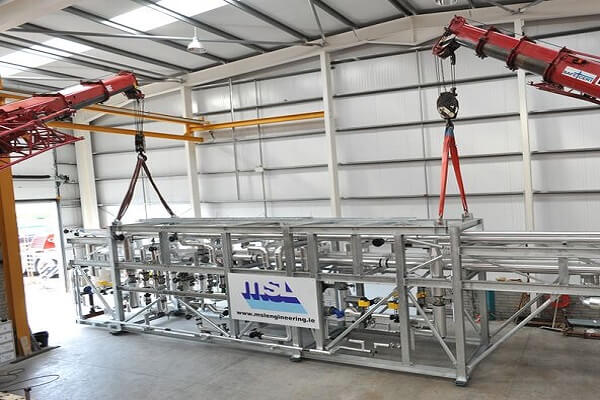
What makes prefabrication a game-changer for production equipment construction? This method offers efficiency and flexibility that traditional construction methods simply can’t match. By using pre-manufactured components, time and costs are significantly reduced. Let’s explore how it is transforming the construction of production equipment.

Streamlining Construction with Modular Techniques

Modular fabrication changes how production equipment is built by incorporating pre-fabricated modules that can be assembled on-site. This approach offers faster construction timelines compared to conventional building methods. Pre-manufactured parts are created in controlled environments, reducing on-site construction time and mitigating weather or site conditions risks.

This also leads to higher precision and fewer errors. With components being produced in a factory setting, quality control is improved, ensuring that all parts meet stringent standards. Additionally, modular systems are easily scalable, allowing for customization based on specific production needs.

 Production Equipment Construction

Reduced Downtime 

One of the most notable benefits of prefabrication is its impact on cost and downtime. Traditional methods often involve longer construction periods, which can result in higher labor costs and longer periods of production downtime. Modular techniques allow production equipment to be up and running much faster. 

The pre-fabrication of components allows for simultaneous preparation of parts while the site is being prepared, reducing overall project timelines. This efficient use of time translates into lower costs for businesses, allowing them to begin production sooner and without unnecessary delays. Ultimately, this approach ensures that companies can meet their operational targets more effectively.

Choosing Trained Professionals for Prefabrication

When opting for prefabrication, choosing trained professionals experienced in this specialized method is essential. Expert builders are familiar with the complexities of assembling pre-fabricated components and ensuring that all systems function seamlessly together. Their knowledge of design, materials, and assembly techniques is critical to the success of the project. 

Moreover, working with experienced professionals minimizes the risks of errors that can arise during assembly. These experts ensure that modular units are correctly integrated into the overall system, making sure the equipment operates efficiently from day one. Choosing trained professionals guarantees that the project is completed to the highest standards.

Flexibility and Adaptability for Various Industries

  • Offers exceptional flexibility and adaptability, making it suitable across diverse industries.
  • Ideal for sectors like manufacturing, energy production, and food processing.
  • Modular systems can be customized to meet specific operational needs.
  • Easily adapted to evolving industry demands, enabling quick response to market changes.
  • Supports scalability and adjustment of production capacity as required.
  • Prefabrication allows easier modifications to production lines.
  • Ensures equipment keeps pace with technological advancements and shifting consumer demands.

Industries That Rely on Prefabrication

A wide range of industries benefit from prefabrication due to its efficiency, scalability, and adaptability. Modular systems streamline production lines in the manufacturing sector and simplify maintenance and upgrades. The energy industry, including renewable sectors like solar and wind, uses modular units for fast deployment and easy integration in remote or challenging environments. 

Food and beverage processing facilities leverage modular setups to meet stringent hygiene standards while maintaining flexibility for product changes. Pharmaceutical and biotech companies depend on modular cleanrooms and labs that can be expanded or reconfigured quickly to support research and compliance needs. From industrial plants to high-tech sectors, prefabrication meets the demand for speed, customization, and operational agility.

Long-Term Durability and Maintenance Benefits

Modular systems often simplify maintenance by making replacing or repairing individual modules easier without disrupting the entire system. Since parts are pre-tested and assembled in controlled environments, defects are less likely, and maintenance can be planned and scheduled in advance. 

This reduces the need for emergency repairs and extends the overall lifespan of production equipment. As a result, businesses benefit from reduced operational costs and less downtime for repairs.

Modular fabrication has revolutionized the construction of production equipment, offering faster build times, cost savings, and adaptability. With the help of trained professionals, this efficient approach ensures higher quality and durability in the final product. As companies continue to embrace this method, they can rely on modular solutions to enhance their operations and meet industry demands more effectively.

Photography has an incredible way of turning everyday moments into lasting memories. For many, what begins as a fun weekend activity or creative escape slowly transforms into a serious pursuit. The journey from hobbyist to professional photographer is filled with learning curves, exciting milestones, and the constant evolution of style and skill. If you’ve ever wondered what it takes to go from casually snapping photos to building a thriving photography career, this guide will walk you through the key stages of that transformation.

Discovering the Passion

Every photographer starts with a spark—perhaps it’s the thrill of capturing a perfect sunset, the satisfaction of framing a candid smile, or the joy of documenting adventures with friends. In the beginning, it’s all about exploration. You experiment with your phone or an entry-level camera, take photos of everything and anything, and start to notice how light, color, and angles affect the outcome. This phase is all about play and curiosity, and it’s the foundation for everything that follows.

Learning the Craft

As your interest deepens, so does your commitment to the craft. You begin researching gear, investing in a better camera, or learning how to edit your images. Technical terms like aperture, ISO, and shutter speed start to make sense. You discover the importance of composition, lighting, and timing. You might take an online course, follow photography blogs, or join local meetups. This is the point where you start to move beyond snapshots and begin creating intentional, compelling images.

Building Confidence Through Practice

At some point, someone asks you to take their photo—a friend needs a headshot, or a relative wants event coverage. This first gig is both exciting and nerve-wracking. While you may still be finding your footing, these early sessions are incredibly valuable. They teach you how to direct people, manage expectations, and work under pressure. More importantly, they give you the confidence to imagine photography as something more than just a hobby.

Developing a Portfolio

As you take on more shoots, it becomes essential to curate your best work. A strong portfolio showcases your style, versatility, and technical skill. It’s your visual résumé and often the first impression potential clients will have of your work. Choose images that reflect your niche and personality—whether it’s moody portraits, vibrant events, or clean product shots. Display them on a professional website or portfolio platform to start building your online presence.

Networking and Community

Growth as a photographer doesn’t happen in isolation. Surrounding yourself with other creatives can inspire new ideas, offer constructive feedback, and open the door to collaboration. Attend local workshops, join photography groups, and connect through social media. Community events can also lead to unexpected opportunities. For example, working alongside a photo booth rental atlanta at a wedding or corporate event can help you meet vendors, get referrals, and capture dynamic, spontaneous images that enrich your portfolio. These collaborations are a great way to build both experience and exposure.

Finding Your Niche

As you gain experience, you’ll naturally gravitate toward certain types of photography. Some photographers fall in love with weddings, while others prefer portraits, commercial work, or travel photography. Finding your niche allows you to focus your branding, target the right clients, and refine your style. That said, early in your journey, it’s beneficial to try different genres to discover where your strengths and passions align.

Business Basics for Going Pro

Turning photography into a full-time profession requires more than creative talent—it demands business savvy. You’ll need to figure out your pricing, draft contracts, manage your finances, and market your services. Building systems for scheduling, invoicing, and communication helps you stay organized and professional. Tools like client management software and online galleries can save time and improve the client experience. As you grow, you may even consider investing in branding or working with a mentor to fine-tune your approach.

Mastering the Client Experience

Delivering stunning images is only part of being a successful photographer. What truly sets professionals apart is how they treat their clients—from the first inquiry to the final gallery delivery. Prompt responses, clear expectations, and a friendly attitude can turn a one-time session into a long-term relationship. Whether you’re covering a high-profile event or photographing guests enjoying a photo booth rental, professionalism and attention to detail make a lasting impression.

Evolving and Growing

Photography is an ever-evolving field. As trends shift and technology advances, staying relevant means continuing to learn and grow. Whether it’s exploring new editing techniques, diving into film photography, or launching a personal project, there’s always something new to master. Staying creatively inspired helps prevent burnout and keeps your work fresh. The best photographers are lifelong students who never stop challenging themselves.

Conclusion

The journey from hobbyist to professional photographer is a deeply personal and rewarding transformation. It’s about discovering your passion, committing to your craft, and building a brand that reflects your unique vision. Along the way, you’ll gain technical skills, business experience, and creative confidence. Whether you’re directing a formal shoot or capturing authentic moments next to a buzzing photo booth rental, every frame you take is a step forward. With passion, patience, and persistence, what starts as a hobby can evolve into a fulfilling and successful career.

Lansing, Michigan, is perfect for a peaceful and relaxing weekend getaway. Whether seeking a break from the hustle and bustle of everyday life or simply looking to enjoy some time in a serene environment, the city has a variety of activities to suit different interests. With its rich history, scenic views, and plenty of options for unwinding, it is an ideal choice for a tranquil retreat.

Explore Local Parks and Nature Trails

For nature lovers, there are plenty of things to do in Lansing, MI. A visit to the beautiful Potter Park Zoo is a must, where visitors can enjoy a peaceful walk through the zoo’s various exhibits. Additionally, nearby River Trail Park provides an idyllic escape along the Red Cedar River. If more extensive hiking or a day out in nature is on the agenda, the surrounding area is home to several state parks and natural reserves. The Williamston State Park offers a serene environment with a rich collection of plants and wildlife, ideal for those seeking peace and quiet.

Immerse in Local Art and Culture

For a cultural experience, the local art scene provides an excellent opportunity to enjoy creativity in a calm environment. The Michigan History Center offers a fascinating look into the state’s history, and the exhibits are designed to be both educational and relaxing, making it an ideal stop for those who enjoy slow-paced exploration. Another place of interest for art lovers is the Broad Art Museum on the Michigan State University campus. The museum features a variety of contemporary art exhibitions and invites visitors to enjoy the quiet beauty of carefully curated displays.  

Relax and Unwind in the Local Dining Scene

Weekend Away

The dining scene offers a mix of cozy cafes, family-owned restaurants, and quaint eateries that focus on local ingredients and flavors. Whether looking for a relaxed brunch spot or a quiet dinner out, there are many options for all tastes. Many local establishments have a welcoming atmosphere perfect for enjoying a meal in peace, making it easy to savor dishes while avoiding the noise of a busy environment. From freshly brewed coffee to baked goods, these spots provide comfort and relaxation without the chaos of larger city centers.

Visit Historic Landmarks and Attractions

The city is home to several historical landmarks that tell the story of the region’s past. The State Capitol building offers guided tours where visitors can learn about Michigan’s legislative history in a peaceful and informative setting. These tours allow guests to experience the beauty of the building’s architecture while gaining insights into Michigan’s political history.

Another landmark worth visiting is the R.E. Olds Transportation Museum, which showcases the history of automobiles and the story of Oldsmobile in the Lansing area. The museum offers a quiet and educational experience, perfect for those who appreciate history and vintage vehicles. Strolling through the exhibits provides a tranquil afternoon to learn about the region’s industrial past.

Relaxing Services for a Stress-Free Weekend

The city provides numerous wellness and spa treatment options for those seeking added relaxation during their weekend getaway. Several spas in the area offer services like massages, facials, and body treatments, perfect for unwinding after a long day of sightseeing. Whether looking to relax with a full spa day or simply enjoy a rejuvenating massage, these services cater to those wanting to enhance their time in the area with soothing treatments.

Spending a quiet weekend away in Lansing offers visitors a variety of opportunities to relax, unwind, and connect with nature and history. With a range of things to do in Lansing, MI, from exploring local parks and museums to enjoying peaceful meals at cozy cafes, there’s no shortage of activities for those seeking a restful retreat. Lansing’s rich history, scenic beauty, and welcoming atmosphere make it an ideal destination for those looking to slow down and enjoy a calming getaway.

Every person deserves access to adequate medical treatments without financial strain. The cost management process starts with proper research and planning. Medical insurance verification helps determine coverage options and payment plans available through different providers.

Cost factors that affect treatment prices

  • Medical equipment maintenance requirements
  • Duration of treatment sessions
  • Number of sessions needed
  • Medical staff expertise level
  • Location-based operational expenses
  • Modern technology implementation costs
  • Regular system calibration needs

Finding affordable treatment options

Smart planning leads to substantial savings in medical expenses. Many medical facilities provide flexible payment plans spread across months. Direct communication with healthcare providers about financial concerns creates opportunities for customized payment arrangements.

Payment plans and financing

Financial advisors at medical centres guide patients through various payment methods. Some facilities partner with medical financing companies, offering zero-interest initial periods. Early payment discounts benefit patients who pay the complete amount upfront.

Insurance coverage possibilities

Medical insurance policies differ in their coverage terms. Detailed policy review identifies potential coverage for innovative treatments. Insurance providers need proper documentation proving medical necessity for coverage approval.

Ways to reduce out-of-pocket costs

  • Schedule consultations during promotional periods
  • Ask about package pricing for multiple sessions
  • Check if the facility offers seasonal discounts
  • Consider paying annually instead of per session
  • Look into medical credit card options
  • Request itemized cost breakdowns

Finding value in quality care

The Shockwave for ED Clinic Kansas City maintains high treatment standards and reasonable prices. Medical facilities focusing on patient care invest in advanced equipment and trained staff without excessive markups.

Comparing treatment packages

Price comparison between different treatment packages reveals potential savings. Package deals often include follow-up visits and maintenance sessions at reduced rates. Multi-session commitments typically cost less per treatment than individual appointments.

Financial planning strategies

Creating a dedicated medical expense fund helps manage treatment costs. Monthly savings explicitly allocated for medical needs prevent financial stress. Some employers offer health savings accounts, reducing taxable income while saving for medical expenses.

Making informed decisions

Knowledge about treatment processes helps in making cost-effective choices. Understanding the required number of sessions prevents unexpected expenses. Regular communication with healthcare providers ensures optimal treatment scheduling.

Regular assessment benefits

Periodic progress evaluations prevent unnecessary additional sessions. Tracking improvements helps determine the most effective treatment frequency. Documentation of results supports insurance claims when applicable.

Alternative payment methods

Medical credit cards often provide special financing terms. Some facilities accept health savings account payments. Flexible spending accounts offer tax advantages for medical expenses.

Price negotiation opportunities

Many facilities consider reasonable price negotiations. Volume discounts might apply for prepaid session packages. Special rates could be available for returning patients.

Maximizing treatment value

Each session builds upon previous treatment results. Following recommended treatment intervals optimizes effectiveness. Professional medical guidance ensures appropriate treatment progression.

Budget management tips

  • Track all treatment-related expenses
  • Keep detailed records of payments
  • Monitor insurance claim status
  • Review monthly medical spending
  • Adjust payment plans as needed

Financial planning makes quality medical care accessible. Various payment options accommodate different budgetary needs. Professional medical facilities work with patients to create manageable payment solutions while maintaining high treatment standards.

Trees are a beautiful part of our environment. They give us shade, improve our air quality, and add beauty to our neighborhoods. However, taking care of trees is not always easy. Many people try to handle tree care on their own, but this can be risky and difficult.

Hiring a professional tree care service can make a big difference. In this article, we will discuss why hiring professionals for tree care is worthwhile.

Safety First

Taking care of trees often involves climbing tall trees and using heavy equipment. This can be very dangerous, especially for someone without the right training. Professional tree care workers are trained to handle these tasks safely.

They use special equipment and follow safety protocols to make sure no one gets hurt. By hiring professionals, you are not just protecting yourself but also your family and neighbors.

Expertise and Knowledge

Trees are living organisms, and they need proper care to stay healthy. Professional tree care workers have the expertise and knowledge to take care of trees properly. They can identify diseases and pests that might harm your trees and know how to treat them.

They also understand the needs of different types of trees and can provide the right care for each one. This expertise ensures that your trees will be healthy and strong for many years to come.

Residential Tree Care Services

Many people think that tree care services are only for large properties or commercial spaces. However, residential tree care services are very common and important. Professionals can help with a variety of services, such as pruning, fertilizing, and planting new trees.

They can also provide regular maintenance to keep your trees healthy. This is especially important in residential areas where trees can enhance the beauty and value of your home.

Proper Equipment

Tree care requires specialized equipment that most homeowners do not have. From chainsaws to tree climbing gear, the tools needed are expensive and require proper handling. Professional tree care services come equipped with all the necessary tools. They also know how to use these tools correctly, which ensures that the job is done efficiently and safely.

Tree Removal

Sometimes, a tree might need to be removed. This could be due to disease, storm damage, or because it poses a danger to your property. tree removal is a complex and dangerous task that should always be handled by professionals.

They have the skills and equipment to remove trees safely without damaging your property. Professional tree care services can also help with the cleanup after a tree is removed, making the process smooth and hassle-free.

Conclusion

Trees are a valuable part of our lives and our environment. Proper care is essential to keep them healthy and beautiful. Hiring a professional tree care service is a worthwhile investment. It ensures safety, provides expert care, saves time, and keeps your trees in the best possible condition.

Whether you need routine maintenance, help with a sick tree, or tree removal, professional tree care services are the best choice for homeowners.

As a California parent, you want your kid to be fit and active. One way to help your kid reach those goals is to play sports with them. They can also learn how to be a good sport and work with others. 

Unfortunately, kids who play sports are more likely to get hurt, especially in the mouth or face. Children who engage in sports with a lot of contact are most likely to get hurt and lose a tooth, but children who play basketball, baseball, and martial arts are also at risk. Like a lot of other health problems and accidents, keeping your child from getting dental injuries can help protect their oral health. You should speak to an Aliso Viejo dentist to learn more. 

Why do people get dental injuries when they play sports? 

Kids get more dental problems than you might think when they play sports. A 10-year study by the American Academy of Pediatric Dentistry found that almost one-third of all injuries in children were caused by sports. This shows that playing sports increases the chance of getting mouth and maxillofacial injuries. 

A study of tooth accidents that happened in U.S. emergency rooms from 1990 to 2003 also found that 81% of them were in kids younger than 17 years old. Kids younger than seven years old were most likely to get these tooth problems. 

These numbers make it clear how important it is to protect your child’s smile while they play sports by buying protective gear like mouthguards to fit their needs. Whether a child is starting soccer lessons for the first time or a teen is playing football in high school, mouth problems should not be ignored.

How can you keep your teeth from getting hurt in contact sports?

It is not enough to just get your child the right mouthguard for physical sports to protect their smile. If you want to lower your chance of tooth accidents, try these things:

  • Dental injuries are much less likely to happen in games like soccer, football, and basketball if the right skills are taught, like how to fall safely.
  • Make sure to check your child’s safety gear often for signs of damage. Any broken or worn-out tools should be replaced.
  • Make sure your kid wears their mouthguard to games and training. 
  • Kids often have accidents when they are not paying attention. Tell your kids to stay alert while they play so they do not hit anything.

Along with taking precautions, your child player needs to get regular dental care. Make sure they use a mouth rinse made for kids and brush and floss their teeth twice a day. If you follow these steps, you can help your child enjoy the thrill of contact sports while also keeping their smile safe. 

Our sports watching has altered thanks to streaming providers. More individuals now utilize the internet than they use television to watch sports. This change is affecting conventional 해외축구중계.

Modality and Convenience

This shift has been made, in part, for convenience. You may watch sports anywhere, at any time, using streaming services. The TV has to be in front of you at home no more. Computer, tablet, or phone viewing is available. Fans may watch sports on the fly and this flexibility suits hectic schedules.

Economies of Scale

Cost is another factor in why consumers choose streaming. Much less expensive than cable TV are several streaming providers. You don’t have to pay for channels you never watch when you subscribe to only the sports ones. Fans may now more easily follow their preferred sports without going over budget.

More Sports Content Accessible

More sports material is also available on streaming sites. Many more games can be televised via streaming platforms than by traditional TV networks. Fans may now see games they would not otherwise be able to see on conventional TV and have additional options.

Interactive Elements Improve the Watching Experience

Many times, interactive capabilities seen in streaming services are absent from conventional TV. You may, for instance, watch many games at once or stop and rewind live ones. Instant replays and live statistics are further features of certain providers. Thanks to these elements, sports viewing is more interesting and pleasurable.

Results for Conventional Broadcasters

Streaming services’ ascent is posing a threat to established sports networks. Reduced TV viewership translates into lower ad income for TV networks. The change is making conventional broadcasters change as well. Some are collaborating with current streaming providers or starting their own.

Forecast for Sports Television

Streaming services seem destined to rule sports broadcasting in the future. As long as technology keeps getting better, streaming will probably grow even more popular. The future is streaming, even if traditional TV may still have a place. More choices, improved functionality, and more ease will be enjoyed by fans.

All things considered, streaming services are revolutionizing 해외축구중계. They provide more material, cost savings, and convenience. Interactive elements improve the watching experience and increase the enjoyment of sports. Traditional broadcasters are responding to this new trend even as they encounter difficulties. Sporting broadcasting has a bright future, and streaming services are leading the way.