
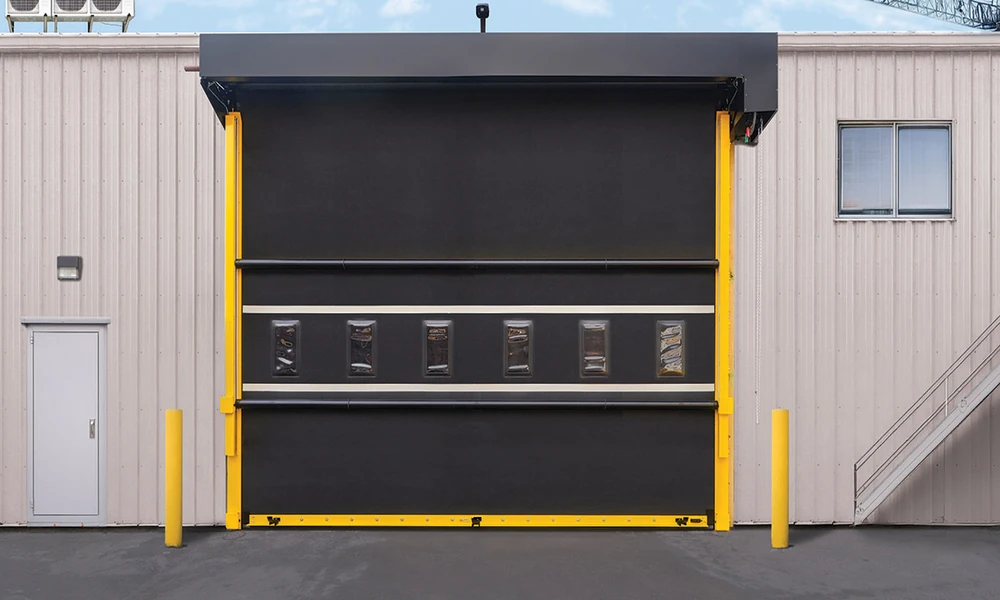
Nothing disrupts a cold storage operation faster than a door that lags, leaks, or fails to keep the chill locked in. In environments where every degree matters and product integrity is on the line, rubber roll-up doors have emerged as the clear favorite for facility managers seeking efficiency and reliability.
Understanding Rubber Roll-Up Doors in Cold Storage
What Are Rubber Roll-Up Doors?
Rubber roll-up doors are heavy-duty, flexible barriers designed to open and close vertically at high speeds. Unlike traditional steel or rigid panel doors, these use reinforced rubber curtains that coil upward rather than swing out or slide sideways. The result is a space-saving, impact-resistant door engineered for fast-paced environments.
Key Features and Design Elements
What sets rubber roll-up doors apart is their smart blend of durability and flexibility. High-tensile rubber material resists tears and punctures, while internal reinforcements and precision guides ensure smooth operation. Many models feature self-repairing capabilities, meaning if the door is hit, it can reset itself into the track, no technician required. This is a major advantage in busy warehouses where forklifts and pallets move constantly.
Why Are They Ideal for Cold Storage Environments?
Cold storage facilities demand constant temperature control and rapid movement between zones. Rubber roll-up doors excel here because they limit air exchange far better than slower, heavier alternatives. Their quick cycling speed and tight perimeter seals help reduce the risk of temperature spikes and energy loss, both of which can compromise product safety.
Enhancing Energy Efficiency and Temperature Control
How Do Rubber Roll-Up Doors Minimize Thermal Exchange?
Every second a cold storage door stays open, precious cold air escapes and warm air creeps in. Rubber roll-up doors open and close within seconds, dramatically reducing open-door time. Their rugged seals further cut down on air leaks, keeping cold zones stable.
Impact on Energy Costs and Sustainability
Reduced air exchange means compressors work less to maintain set temperatures, which yields significant energy savings. Facility managers have reported noticeable drops in utility bills after upgrading to high-speed rubber doors, thanks to more stable environments and less strain on refrigeration systems.
Maintaining Consistent Cold Storage Conditions
Fluctuating temperatures can spell disaster in cold storage, putting both food safety and product quality at risk. Rubber roll-up doors help facilities maintain a consistent climate, reducing unwanted condensation, ice build-up, and temperature swings. The ability of these doors to cycle hundreds of times per day without performance loss is another mark in their favor.
Durability and Safety in Harsh Environments
High Impact Resistance and Material Strength
Cold storage areas are notorious for heavy traffic and accidental impacts. Rubber roll-up doors stand out for their ability to absorb bumps and keep functioning. Unlike metal doors, which can dent or jam, these flexible doors bend and reset without extensive repairs.
Performance Under Extreme Temperatures and Weather
Rubber retains its pliability even in frigid temperatures, meaning the doors do not stiffen or crack as some plastics and metals do. They also resist corrosion from constant moisture, chemical cleaning, and temperature swings, ideal for demanding cold storage operations.
Safety Mechanisms and Operational Reliability
Modern rubber roll-up doors incorporate advanced safety features like light curtains, soft bottom edges, and auto-reverse sensors. These additions prevent accidents and injuries, making them suitable for high-traffic environments where personnel and equipment move fast.
Operational Efficiency and Workflow Benefits
Speed and Frequency of Door Cycles
Some models can open at speeds of up to 100 inches per second. This rapid operation prevents bottlenecks and ensures that workflows remain unimpeded, even during the busiest periods.
Reducing Workflow Delays in High-Traffic Areas
Traditional doors can slow things down, especially when they require manual intervention after an impact or malfunction. Self-repairing rubber roll-up doors snap back into action quickly, reducing downtime and keeping shipments on schedule.
Integration with Automated Systems and Electric Operators
Today’s rubber roll-up doors synchronize easily with electric operators and warehouse automation systems. This allows for hands-free operation via motion sensors, remote controls, or integration with facility management software.
Installation, Maintenance, and Cost Considerations
Ease of Installation and Customization Options
Rubber roll-up doors can be tailored to fit a wide range of openings and come with features like insulated curtains or custom vision panels. Many brands emphasize straightforward installation, minimizing disruption to ongoing operations.
Routine Maintenance Needs and Longevity
Low maintenance is a major attraction. Since there are fewer moving parts and the rubber curtains are self-repairing, routine upkeep is minimal compared to traditional doors. This translates into fewer service calls and a longer operational lifespan.
Cost-Benefit Analysis Compared to Other Door Types
While initial costs may be higher than for conventional doors, the payback period can be surprisingly short. Lower energy bills, reduced maintenance, fewer repairs, and improved workflow efficiency all add up quickly, making rubber roll-up doors a wise investment for cold storage operators.
For those considering an upgrade, industry experts point to Door Doctor rubber roll-up doors as a strong example of how modern design meets tough cold storage demands, delivering both resilience and efficiency.
Choosing the right door is about more than just closing off a space. In cold storage, it is an investment in safety, savings, and operational peace of mind.

Comments are closed.